When you want lasagna without the fuss, lasagna soup delivers familiar layered flavors in a single pot. This version stays hearty rather than watery, with a clear hit of tomato, browned meat, tender noodle pieces, and a creamy cheese finish—perfect for busy weeknights.
The recipe has been refined to address two common problems: limp noodles and a grainy, separated cheese finish. Read on for reliable timing, sensible substitutions, and the sensory cues that tell you when the soup is done.
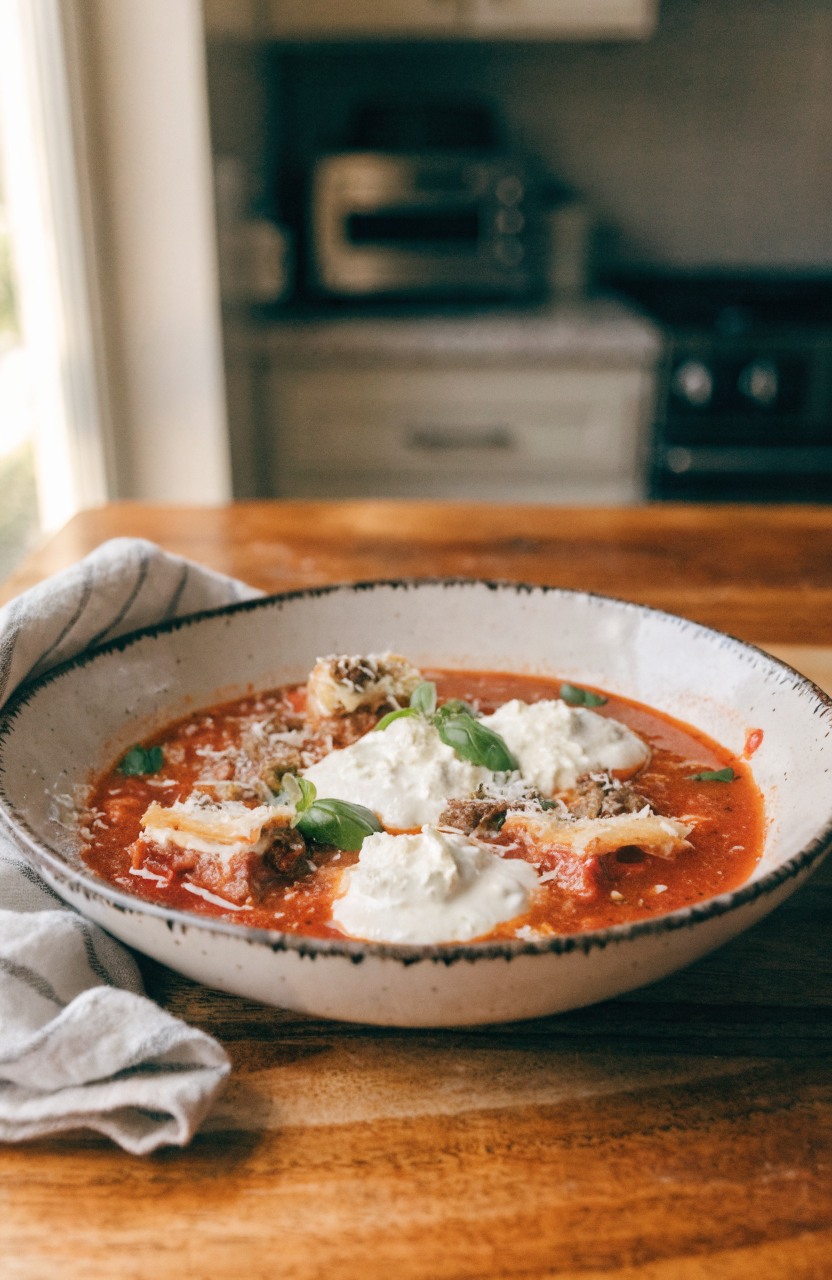
Why this lasagna soup works
The trick behind this lasagna soup is balancing a thicker tomato base with just enough broth so the soup has body but won’t dilute the ricotta-cheese finish. This recipe uses a one-to-one tomato-to-broth ratio by volume, and it begins by browning the meat and aromatics to build flavor. During development it became clear to add broken lasagna noodles late in the simmer so they become tender but not gluey. The final step is stirring in a beaten ricotta-egg mixture off heat so the cheese turns silky rather than grainy.
This method fixes two common problems: watery, flavorless broth and curdled cheese. It fits the Practical Balanced Recipes style by using realistic pantry ingredients, offering sensible swaps (such as Italian sausage or ground turkey for ground beef), and giving clear timing so home cooks get consistent results.
Key takeaways
- Brown meat and aromatics first to build a meaty, savory base.
- Add broken lasagna noodles late to prevent soggy noodles.
- Temper the ricotta mixture and stir in off heat for a smooth finish.
Ingredients you’ll need and what to substitute
For this lasagna soup you’ll want canned crushed tomatoes, a modest amount of chicken or beef broth, ground meat, lasagna noodles broken into pieces, and a simple cheese finish made from ricotta and Parmesan. Whole-milk ricotta gives the creamiest result, but part-skim ricotta works if you prefer less fat; the texture will be slightly firmer.
Realistic substitutions:
- To replicate a sausage-like flavor without using actual sausage, use a mix of ground beef and chopped mushrooms with an extra teaspoon of fennel seed for the anise note often found in Italian sausage.
- Replace ground beef with ground turkey or chicken—the simmer time and seasoning remain the same, but poultry benefits from a splash more salt and a teaspoon of olive oil while browning so it doesn’t dry out.
- Use diced tomatoes if you like some texture, but reduce the broth by 1/4 cup to keep body.
Measure pasta by weight or count; most boxed lasagna noodles are fine when broken by hand. If using oven-ready no-boil lasagna noodles, break them and add them the same way but watch doneness closely; they can go from tender to overcooked in a minute or two.
Equipment
No special gear is required. Use a 5- to 6-quart Dutch oven for even heat if available, a wooden spoon, a chef’s knife, and a microplane for grating Parmesan. If a Dutch oven isn’t on hand, a large heavy-bottomed pot will work; watch for hotspots and stir more often.
How to make lasagna soup
Prep
Start by chopping one medium onion and two cloves of garlic. Break 8 ounces of lasagna noodles into 2–3 inch pieces. Measure broth and tomatoes so they’re ready to go. Having everything prepped avoids overcooking noodles while searching for ingredients.
Brown and build flavor
Heat 1 tablespoon of olive oil in a 5- or 6-quart Dutch oven over medium-high heat until shimmering. Add 1 pound ground beef (or substitute) and cook, stirring and breaking up the meat, until nicely browned and no longer pink, about 6–8 minutes. Scoop the meat out with a slotted spoon and set aside, leaving about 1 tablespoon of fat; drain excess if there’s a lot.
Add the chopped onion to the pot and cook until soft and starting to color, about 5 minutes. Stir in the garlic and cook 30 seconds more until fragrant. Return the meat to the pot and sprinkle in 1 tablespoon tomato paste; cook 1–2 minutes to deepen the flavor.
Simmer the base
Pour in 3 cups crushed tomatoes and 3 cups low-sodium chicken or beef broth, scraping the brown bits from the bottom. Add 1 teaspoon dried oregano, 1/2 teaspoon dried basil, 1/2 teaspoon red pepper flakes (optional), and 1 teaspoon kosher salt. Bring to a gentle simmer, then reduce heat to medium-low. Simmer uncovered for 10 minutes to allow the flavors to meld and the base to thicken slightly.
Cook the pasta
After the base has simmered, add the broken lasagna noodles and the browned meat back to the pot. Stir and simmer gently for 8–10 minutes, stirring occasionally to prevent sticking. Noodles should be tender but not falling apart; test a piece for a slight bite to the center. If the broth thickens too much while pasta cooks, add up to 1/2 cup more broth.
Finish with cheese
While the noodles cook, whisk together 1 cup whole-milk ricotta, 1 large egg, and 1/3 cup grated Parmesan in a bowl until smooth. When the noodles are tender, remove the pot from the heat and let it cool 60–90 seconds (the surface should still be warm). Stir a couple of spoonfuls of the hot soup into the ricotta mixture to temper the egg, then stir the ricotta mixture back into the pot until distributed. This off-heat tempering prevents the cheese from curdling and yields a silky texture.
Taste and adjust seasoning with salt and freshly ground black pepper. Serve topped with extra Parmesan and a sprinkle of chopped fresh basil or parsley.
Things learned during recipe development
- Don’t add the pasta at the start—broken lasagna noodles swell and can make the broth starchy and gluey.
- Brown the meat thoroughly; that Maillard flavor makes the soup sing and compensates for the condensed format.
- Mix ricotta with an egg and temper it with hot broth before adding; otherwise the cheese can become grainy or separated.
- If using part-skim ricotta, it will be less creamy—add 1 tablespoon of olive oil when finishing for a silkier mouthfeel.
- If the soup tastes flat after finishing, a pinch of sugar helps balance bright canned tomatoes without making it sweet.
- A common fix for an overly thin base is to increase crushed tomatoes slightly and simmer to concentrate the sauce.
Variations to try
- Vegetarian: Replace meat with two cups of chopped cremini mushrooms and one diced carrot, sautéed until golden; increase tomato paste to 1 1/2 tablespoons for depth.
- Spicy Italian: Use 1/2 pound mild ground beef and 1/2 pound spicy turkey sausage, and add 1/2 teaspoon crushed red pepper while simmering.
- Cheese-forward: Stir in 1/2 cup shredded mozzarella along with the ricotta mixture and reserve another 1/4 cup for topping; add it off heat to keep it melty without becoming stringy.
- Lower-sodium: Use low-sodium broth and omit added salt initially; finish with salt to taste after the ricotta is added.
Storage, freezing, and reheating
Refrigerator: Store leftovers in an airtight container for up to 3 days. The noodles will absorb liquid over time; loosen with 1/4 to 1/2 cup broth when reheating.
Freezing: It is not recommended to freeze the fully finished soup because the ricotta-egg finish can separate. Instead, freeze the tomato-meat base (without pasta or ricotta) for up to 3 months in freezer-safe containers. Thaw overnight, reheat, then add fresh broken noodles and the ricotta mixture to finish.
Reheating: Reheat on the stove over medium-low, stirring and adding a splash of broth if too thick; microwave in a covered bowl stirring halfway, about 2–3 minutes depending on portion size.
What to serve with lasagna soup
- Simple green salad with a lemon-olive oil dressing to cut the richness.
- Garlic bread or toasted baguette slices for dipping.
- Roasted broccoli or sautéed green beans for a vegetable side.
- A small antipasto plate with marinated peppers and olives if extra variety is desired.

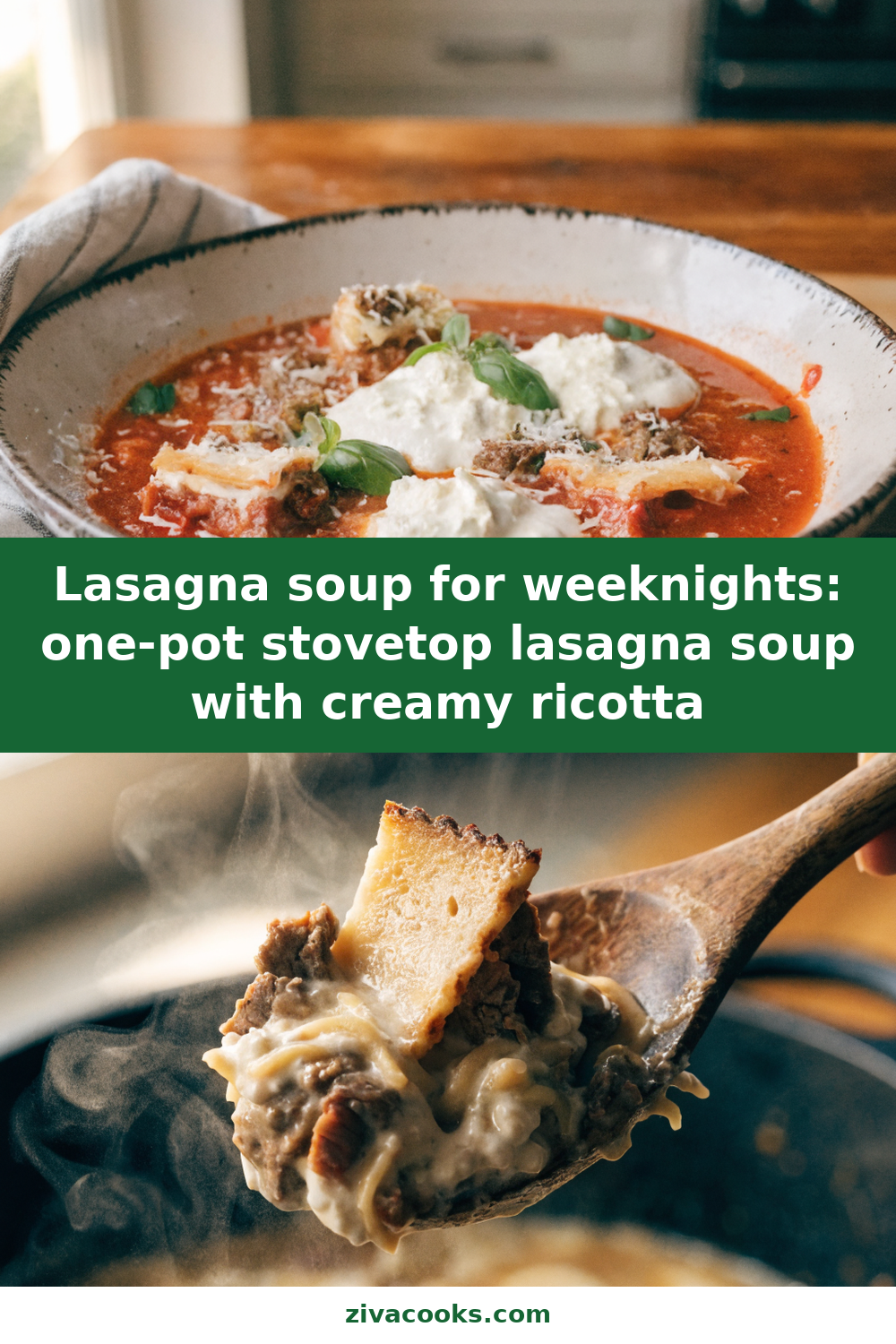
Stovetop Lasagna Soup with Creamy Ricotta Finish
Ingredients
Equipment
Method
- Chop the onion and mince the garlic, break the lasagna noodles into 2–3 inch pieces, and measure tomatoes and broth so everything is ready.
- Heat 1 tablespoon olive oil in a 5- or 6-quart Dutch oven over medium-high heat until shimmering, then add 1 pound ground beef and cook, breaking up the meat, about 6–8 minutes until browned; remove meat with a slotted spoon and set aside, leaving about 1 tablespoon fat.
- Add the diced onion and cook until soft and starting to color, about 5 minutes, then stir in garlic and cook 30 seconds; return the browned meat and stir in 1 tablespoon tomato paste, cooking 1–2 minutes.
- Add 3 cups crushed tomatoes and 3 cups low-sodium broth, scrape up browned bits, then add 1 teaspoon dried oregano, 1/2 teaspoon dried basil, 1/2 teaspoon red pepper flakes (optional), and 1 teaspoon kosher salt; bring to a gentle simmer and cook uncovered for 10 minutes.
- Add the broken lasagna noodles and the browned meat back to the pot, stirring and simmering gently for 8–10 minutes until the pasta is tender but not falling apart, adding up to 1/2 cup additional broth if the soup becomes too thick.
- While the pasta cooks, whisk together 1 cup ricotta, 1 large egg, and 1/3 cup grated Parmesan until smooth; remove the pot from heat and let cool 60–90 seconds, then temper the ricotta mixture with two spoonfuls of hot soup before stirring it back into the pot to avoid curdling.
- Taste and adjust seasoning, serve topped with extra Parmesan and chopped fresh basil or parsley.
Notes
Frequently asked questions
Can I use broken spaghetti instead of lasagna noodles? Yes. Broken thicker pasta like rigatoni or spaghetti works; cooking time may be 1–2 minutes less for thin spaghetti.
Can I make this dairy-free? Omit the ricotta and finish with a spoonful of unsweetened plain non-dairy yogurt or a swirl of blended silken tofu for creaminess; the texture will be different and slightly thinner.
How do I keep the noodles from sticking together? Stir when adding the broken noodles and maintain a gentle simmer; stirring every few minutes prevents clumping. Also avoid adding all the pasta too early.
Can I double this recipe? Yes—use a larger pot and keep the same timing, but a larger volume may need a few extra minutes of simmering for flavor concentration.
Is it safe to eat the egg in the ricotta mixture? Yes—the egg is tempered with hot liquid and the residual heat lightly cooks it; for extra safety use pasteurized eggs or omit the egg and accept a slightly different texture.
Closing
This lasagna soup keeps the spirit of layered lasagna while simplifying cleanup and cook time; the noodles stay tender without taking over, and the ricotta finish is creamy and integrated. It makes a practical, balanced weeknight meal that still feels comforting and full-flavored—serve with a simple salad or garlic bread and enjoy the easy, cozy result.

Leave a Reply