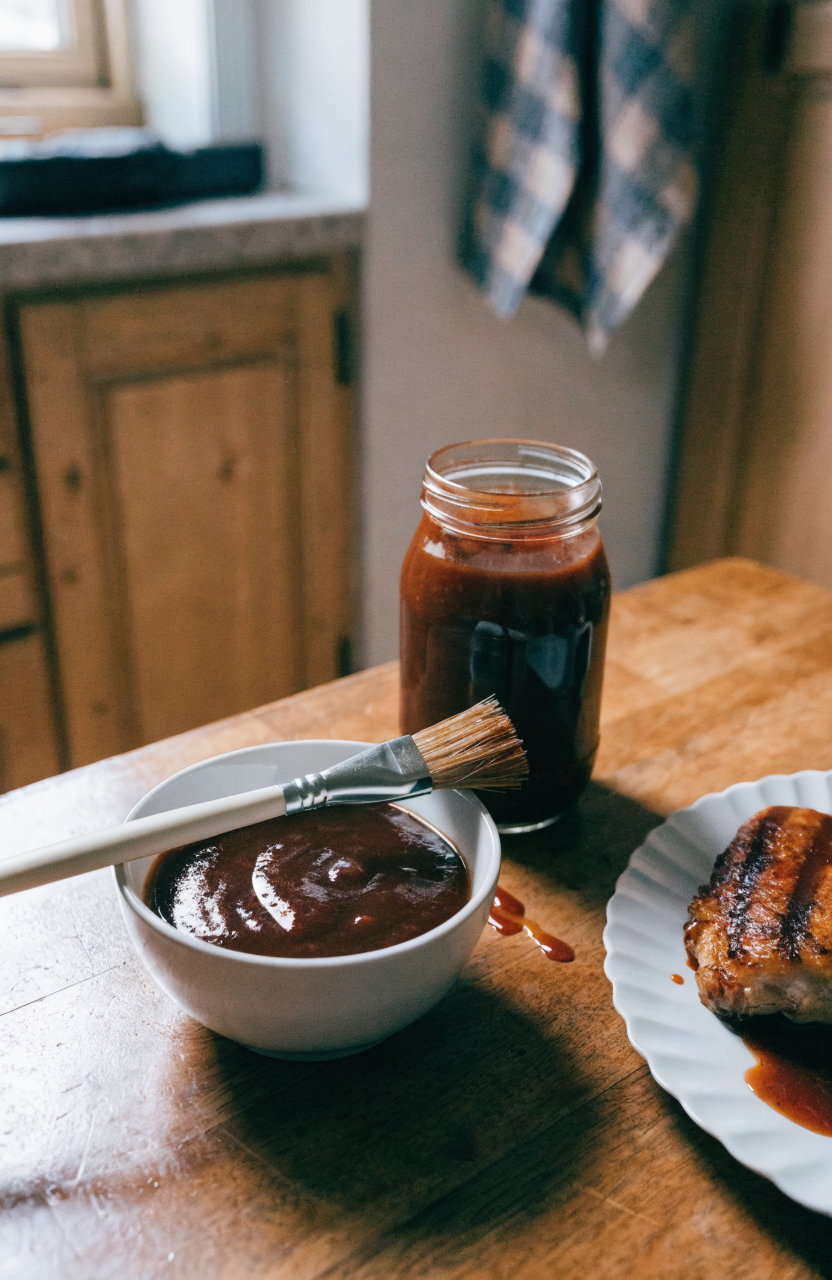
I started making my own homemade BBQ sauce when the store-bought jars tasted either too sweet or oddly thin for the ribs I like to grill. Homemade BBQ sauce gives you control over sweetness, tang, and thickness—so you get a sauce that clings to meat instead of sliding off. This recipe uses simple pantry staples and takes about 30 minutes total, including a short simmer that builds depth without any special equipment.
Why this homemade BBQ sauce works
The trick with homemade BBQ sauce is balancing three things: acidity, sweetness, and viscosity. I settled on a base of tomato sauce for body, a moderate amount of brown sugar and maple syrup for rounded sweetness, and apple cider vinegar for brightness. A small touch of Worcestershire and a bit of smoked paprika supply savory and smoky notes without adding liquid smoke. For thickness, I reduce the sauce gently and finish with a little cornstarch slurry only if I need extra cling. During testing I found the sauce initially came out too sugary, so I reduced the sugar by 20% and extended the simmer by 5 minutes to let the savory components come forward—now it tastes balanced with a glossy finish that sticks to chicken, beef, and vegetables.
Key takeaways
- Use tomato sauce (not ketchup) for a cleaner tomato flavor and predictable viscosity.
- Balance sweetness with acid—apple cider vinegar is forgiving and widely available.
- Simmer gently to concentrate flavor; add a cornstarch slurry only if needed to thicken.
Ingredients you’ll need and what to substitute
Most of the ingredients are pantry staples: canned tomato sauce, brown sugar, apple cider vinegar, yellow mustard, Worcestershire sauce, and spices. I use light brown sugar for a mild molasses note; dark brown will make the sauce richer and deeper. If you keep only ketchup on hand, you can substitute half the tomato sauce with ketchup but cut sugar by 1 to 2 tablespoons because ketchup is already sweetened. For a gluten-free option, use a gluten-free Worcestershire or replace it with a splash of tamari and a pinch of anchovy paste if you tolerate it. If you want less sugar, swap half the brown sugar for a neutral-tasting sugar substitute or reduce the sugar and add an extra teaspoon of Worcestershire and another minute of simmer time to deepen umami.
Important handling notes: measure the vinegar carefully—too much makes the sauce sharp—and if using crushed red pepper instead of cayenne, start with half the amount and taste. If you plan to store the sauce, cool it completely and transfer to a clean jar; chilling also thickens the sauce slightly.
Equipment
You don’t need anything fancy. A 2- to 3-quart saucepan gives you room to simmer without boiling over. Use a heatproof spatula for scraping and a small bowl for the cornstarch slurry if you choose to thicken. A fine-mesh sieve is optional if you want an ultra-smooth finish, and a mason jar or airtight container is perfect for storage.
How to make homemade BBQ sauce
Prepare the base
Start by warming the saucepan over medium heat and adding a tablespoon of neutral oil. Sauté a small diced shallot or two tablespoons of minced onion for 2 to 3 minutes until translucent—this is optional but adds savory depth. Add two cloves minced garlic and cook 30 seconds until fragrant, taking care not to brown it. Pour in one 15-ounce can of tomato sauce and stir to combine with the aromatics.
Build flavor and balance
Stir in the brown sugar, maple syrup, apple cider vinegar, yellow mustard, and Worcestershire sauce. Add smoked paprika, regular paprika or sweet paprika if you don’t have smoked, a pinch of cayenne for heat, onion powder, and black pepper. Bring the mixture to a gentle simmer over medium-low heat, stirring so the sugar dissolves. Simmer uncovered for 12 to 15 minutes; you should see the sauce reduce slightly and darken in color. Taste and adjust: if it tastes flat, add a teaspoon of apple cider vinegar; if too sharp, add 1 teaspoon more brown sugar or a teaspoon of maple syrup.
Finish and thicken (if needed)
If you want a glaze-like sauce, mix 1 teaspoon cornstarch with 1 tablespoon cold water to make a slurry and whisk it into the simmering sauce. Cook for another 1 to 2 minutes until glossy and slightly thickened. For the most natural finish, skip the slurry and reduce another 3–5 minutes—the texture will be slightly looser but still clingy when warm.
Strain and store
If you prefer a smooth sauce, push it through a fine-mesh sieve, pressing with a spatula to extract as much as possible. Let it cool to room temperature, then transfer to a jar and refrigerate. The sauce will thicken as it chills; warm gently before using for a pourable consistency.
Things I learned the hard way
- Too sweet: My first batch used too much brown sugar and tasted candy-like—cutting sugar by 20% and simmering longer corrected that.
- Thin sauce: I skimmed recipes that promised thickness without reduction; simmering uncovered for an extra 10 minutes solved it without cornstarch.
- Sharp vinegar bite: Adding vinegar all at once made the sauce bright but sharp; I now add 75% early and the rest at the end for fine-tuning.
- Smoky flavor: I avoided liquid smoke because a little smoked paprika provides controlled smokiness without overpowering the sauce.
- Storage surprise: The sauce thickens in the fridge—plan to reheat gently and stir in a tablespoon of water if it becomes too stiff for brushing.
Variations to try
- Honey-Mustard BBQ: Swap maple syrup for 2 tablespoons honey and increase yellow mustard to 2 tablespoons; simmer 2–3 minutes less to keep a brighter tang.
- Spicy Chipotle: Add 1 to 2 teaspoons chipotle in adobo, minced, and reduce smoked paprika by half; simmer the same time but taste for heat.
- Smoky-Sweet Kansas-Style: Replace 1 tablespoon brown sugar with molasses and add 1 teaspoon ground cumin; simmer 3–5 minutes longer for deeper caramel notes.
- Tomato-Light (lower-sugar): Use half tomato sauce and half no-sugar-added ketchup, drop sugar by 2 tablespoons, and increase vinegar by 1 teaspoon to maintain brightness.
Storage, freezing, and reheating
Refrigerator: Store in an airtight jar for up to 2 weeks. Leave at least 1/2 inch headspace when filling and cool completely before sealing. Freezing: This sauce freezes well in freezer-safe containers or ice cube trays for up to 3 months—thaw in the fridge overnight or at room temperature for about an hour before reheating. Reheating: Warm gently in a small saucepan over low heat, stirring occasionally; 5 to 8 minutes should do it for a chilled jar, add 1 to 2 tablespoons water if too thick. Expect a slightly darker color and tighter texture after chilling; thin with a splash of water or apple cider vinegar to restore pourability.
What to serve with homemade BBQ sauce
This homemade BBQ sauce is versatile: brush it on grilled chicken thighs in the last 5 minutes of cooking, toss with shredded beef, drizzle over roasted vegetables, or use as a dipping sauce for meatballs or roasted tofu. It also pairs well with corn on the cob, roasted sweet potatoes, and a simple cabbage slaw to cut the richness.
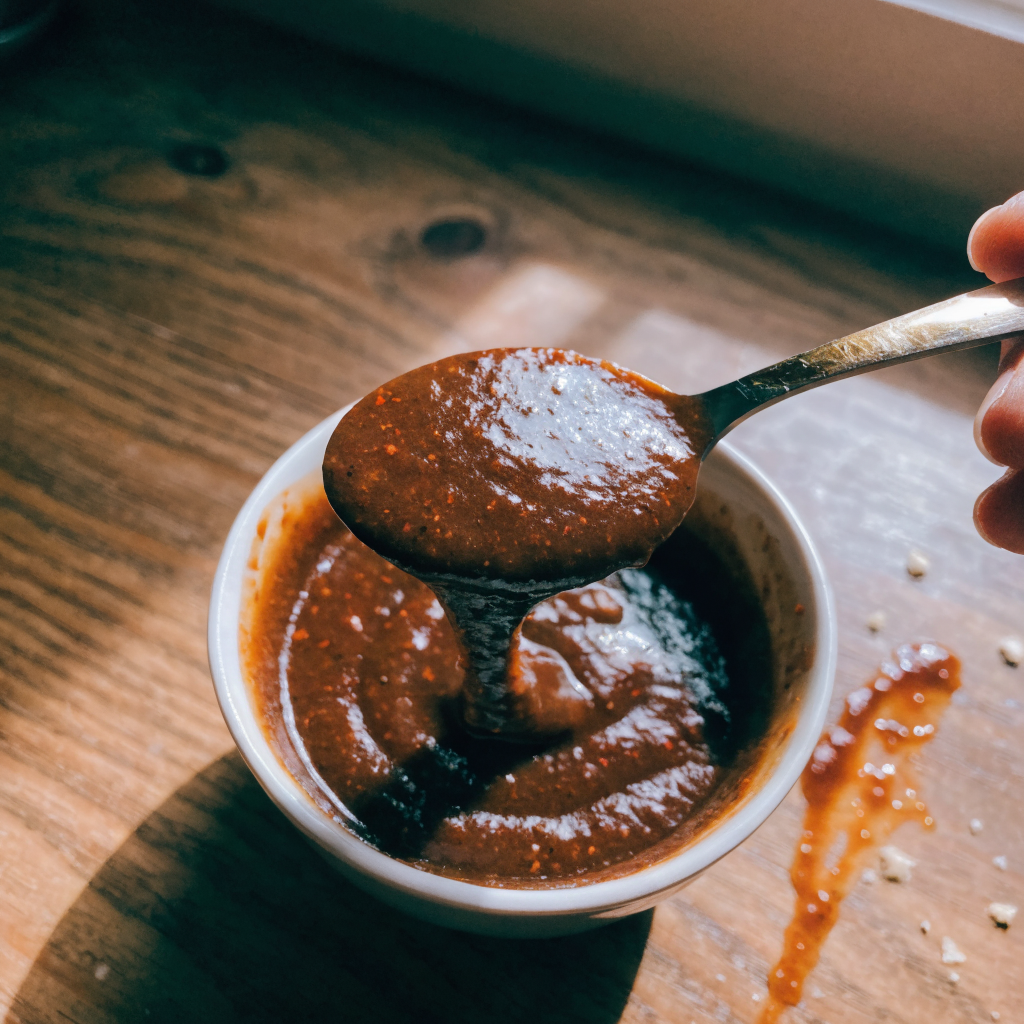
Homemade BBQ Sauce (Balanced, Stove-Top)
Ingredients
Equipment
Method
- Heat the saucepan over medium heat and add the oil. Sauté the shallot or onion for 2–3 minutes until translucent, then add the minced garlic and cook 30 seconds until fragrant.
- Add the tomato sauce, brown sugar, maple syrup, apple cider vinegar, yellow mustard, and Worcestershire sauce. Stir until sugar dissolves.
- Add smoked paprika, sweet paprika, cayenne (if using), onion powder, and black pepper, stir to combine, and bring the mixture to a gentle simmer over medium-low heat.
- Simmer uncovered for 12–15 minutes, stirring occasionally, until the sauce reduces slightly and darkens. Taste and adjust: add up to 1 teaspoon more vinegar for brightness or up to 1 tablespoon more brown sugar if too sharp.
- If a thicker glaze is desired, whisk the cornstarch slurry and stir it into the simmering sauce; cook 1–2 minutes until glossy. For a richer profile, stir in molasses or chipotle and simmer another minute.
- Optional: press the sauce through a fine-mesh sieve for a smooth finish. Cool to room temperature, transfer to a jar, and refrigerate for up to 2 weeks or freeze for up to 3 months.
Notes
Frequently asked questions
Can I make this sauce ahead of time? Yes—this sauce keeps in the refrigerator for up to 2 weeks and often tastes better after a day as the flavors meld. Reheat gently before serving.
Is this recipe gluten-free? The base ingredients are gluten-free, but Worcestershire sauce may contain gluten; use a labeled gluten-free Worcestershire or substitute with tamari to be sure.
Can I use ketchup instead of tomato sauce? Yes, but because ketchup is sweeter and thicker, reduce the brown sugar by 1 to 2 tablespoons and taste as you simmer to avoid over-sweetening.
How do I make the sauce thicker? Simmer it uncovered for a few extra minutes to reduce water content, or whisk in a small cornstarch slurry (1 teaspoon cornstarch + 1 tablespoon cold water) and cook 1–2 minutes until glossy.
Can I freeze the sauce? Yes, pour into freezer-safe containers or ice cube trays and freeze up to 3 months; thaw in the fridge overnight.
Will the sauce burn if I brush it on while grilling? The sugars can char if exposed to direct high flames; brush on during the last 5 minutes of cooking and move the meat to indirect heat if flare-ups occur.
Closing
Making homemade BBQ sauce gave me a reliable, balanced sauce that clings to grilled meat and doubles as a dipping sauce—homemade BBQ sauce is worth the small upfront time for the control it gives you. I keep a jar in the fridge and tweak it slightly for whatever I’m grilling that week. This sauce often tastes even better after a full day of resting in the refrigerator.

Leave a Reply