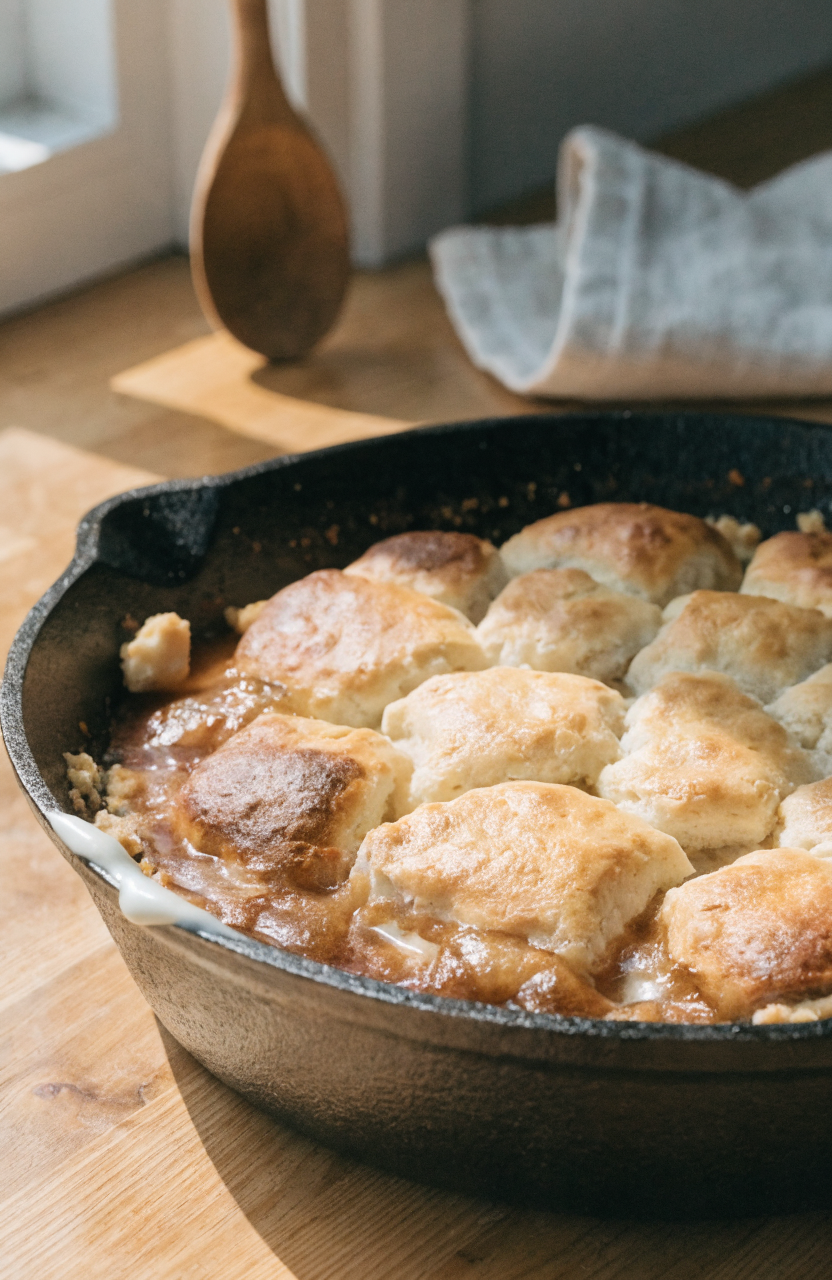
The first time I made this skillet chicken pot pie I under-estimated how watery the filling would get after simmering, and my biscuit top turned soggy in the middle. After a couple of test runs I settled on a slightly reduced liquid, a quick cornstarch slurry, and a laminated biscuit dough that browns quickly in a 12-inch cast iron skillet. The result is a hearty, balanced skillet chicken pot pie with a thick, savory filling and a golden, slightly flaky top—exactly what my family wanted on a weeknight.
Why this skillet chicken pot pie works
What made the difference for me was focusing on two things: controlling filling moisture and ensuring the crust bakes quickly so it doesn’t absorb sauce. The key technique is building a flavorful roux in the skillet from the start: sauté the vegetables, add the flour and cook until it’s pale golden, then slowly stir in stock to make a smooth gravy. I tested recipes where extra broth was added later and discovered the filling could become thin as the vegetables continued to release water while bubbling; using a modest amount of stock plus a cornstarch slurry at the end gives reliable thickness without over-reducing. For the topping I use a biscuit-style dough that’s lamination-friendly—lightly folded butter and brief chilling ensures layers but still bakes fast enough to brown without waiting for the filling to overcook.
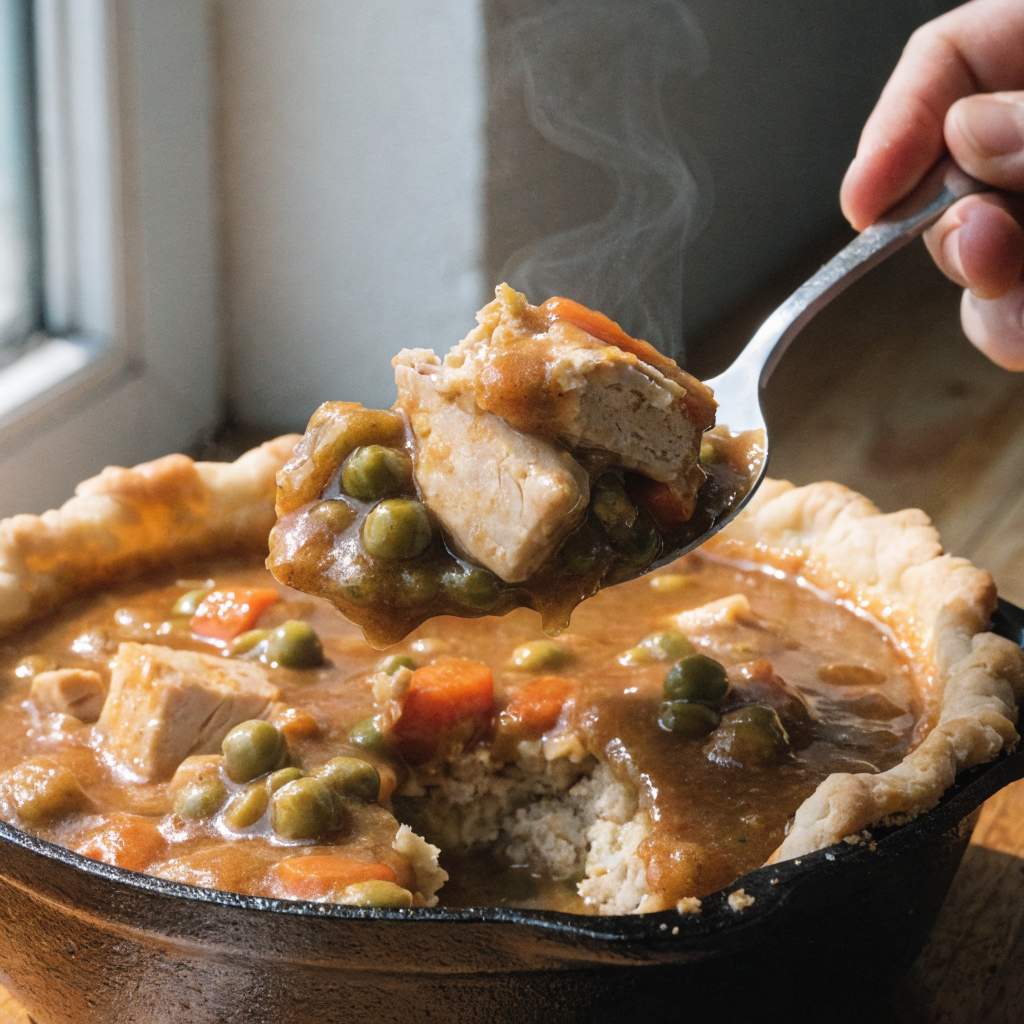
During testing I also adjusted the ratio of chicken to veggies to deliver satisfying bites of meat in every spoonful. Boneless skinless chicken thighs are my go-to because they stay moist, but cooked rotisserie or leftover poached chicken work well too. The final recipe balances savory herbs, a hint of mustard for depth, and a touch of acidity from a splash of lemon juice to brighten the stew.
Key takeaways
- Make a roux in the skillet to control texture and develop flavor.
- Use a modest amount of stock and finish with a cornstarch slurry to prevent a watery filling.
- Choose a quick-baking laminated biscuit top so it browns before soaking through.
Ingredients you’ll need and what to substitute
You don’t need fancy ingredients for this skillet chicken pot pie—just a few pantry staples and a fresh carrot or two. I recommend boneless skinless chicken thighs (about 1.5 pounds) because they stay tender when simmered. You can substitute chicken breasts; if you do, reduce simmer time and watch doneness (165°F internal temperature). For vegetables I use yellow onion, carrots, celery, and frozen peas; frozen peas are convenient and don’t overcook as quickly as fresh peas.
Key ingredient notes and substitutions:
- Chicken: thighs for moisture; rotisserie chicken is an easy shortcut—skip the simmer time and fold shredded meat into the finished gravy.
- Stock: low-sodium chicken stock is best so you control salt; vegetable stock works for a lighter flavor. If using a salted stock, reduce added salt by half and taste at the end.
- Butter and flour: used to make the roux; you can swap equal parts olive oil and a little extra butter if dairy is limited, but color and flavor will change.
- Biscuit topping: commercial biscuit mix may be used (follow package and keep it slightly drier) but I prefer the homemade dough for texture. For a quicker top, use a sheet of puff pastry—brush with egg wash and bake but expect a flakier, less bready top.
- Cornstarch: thickens the filling quickly without reducing flavor; arrowroot can substitute 1:1, but use a slightly lower final boil time.
Equipment
Essential tools make this recipe straightforward:
- 12-inch cast iron skillet (preferred) or other oven-safe 10–12 inch skillet; if using a smaller pan the filling may overflow.
- Wooden spoon or sturdy spatula for making the roux and stirring.
- Chef’s knife and cutting board for prep.
- Measuring cups and spoons and a small bowl to mix the cornstarch slurry.
- Optional: kitchen thermometer to check chicken doneness, and a box grater if you choose to grate cold butter for the biscuit dough.
How to make skillet chicken pot pie
Prepare the filling
Preheat your oven to 425°F so it’s hot enough to brown the biscuit top quickly. Heat 2 tablespoons of unsalted butter and 1 tablespoon of neutral oil in a 12-inch cast iron skillet over medium heat. Add 1 medium diced onion, 2 diced carrots (about 1 cup), and 2 diced celery stalks; season lightly with salt and cook, stirring, until the onion is translucent and the carrots begin to soften, about 6–8 minutes. Add 3 cloves minced garlic and cook 30 seconds more until fragrant.
Push the vegetables to the side and melt 3 tablespoons of butter in the center. Sprinkle 3 tablespoons of all-purpose flour over the butter and vegetables and stir constantly for 1–2 minutes until the raw flour smell is gone and the mixture is pale golden—this is your roux. Slowly pour in 2 cups of low-sodium chicken stock while stirring to combine into a smooth gravy. Add 1 tablespoon Dijon mustard and 1 teaspoon dried thyme (or 1 tablespoon chopped fresh thyme), then bring to a gentle simmer.
Stir in 1 to 1 1/2 pounds cooked and chopped chicken (if starting with raw chicken, see the next paragraph). Add 1 cup frozen peas and season with salt and black pepper. Simmer gently for 4–6 minutes so flavors marry. Mix 1 tablespoon cornstarch with 2 tablespoons cold water and stir it into the simmering filling; simmer 1–2 minutes until thickened. Taste and adjust salt, pepper, and add 1 teaspoon lemon juice to brighten if needed.
If starting with raw chicken
Cut boneless skinless thighs into 1-inch pieces and season with salt and pepper. After sautéing the vegetables, push them aside and increase heat to medium-high. Add 1 tablespoon oil and sear the chicken pieces briefly—about 2 minutes per side—until they have some color but are not fully cooked. Then continue with the roux and stock as above, simmering until chicken reaches 165°F (about 6–8 more minutes).
Make and assemble the biscuit topping
While the filling simmers, combine 2 cups all-purpose flour, 1 tablespoon baking powder, 1 teaspoon kosher salt, and 2 tablespoons sugar in a bowl. Cut in 6 tablespoons cold unsalted butter (cut into small cubes or grated) until pea-sized crumbs form. Stir in 3/4 cup cold buttermilk (or milk mixed with 1 teaspoon vinegar) until the dough barely comes together; do not overwork. Turn the dough out onto a floured surface and fold it over itself twice to create a few layers, then pat to a 9-inch circle about 1/2-inch thick. Cut into 6 large biscuits or 8 smaller ones depending on preference.
Brush the top of each biscuit with a little beaten egg or milk for a glossy finish. Arrange the biscuits on top of the filling in the skillet so edges touch slightly, leaving small gaps for steam. Alternatively, place a single circular top over the filling and crimp edges against the skillet for a more pot-pie style lid.
Bake and finish
Transfer the skillet to the preheated oven and bake at 425°F for 18–22 minutes until the biscuit tops are golden and the filling is bubbling at the edges. If the biscuits brown too quickly, tent with foil for the remaining time. Remove from oven and let rest 8–10 minutes before serving—the filling will finish setting and be easier to portion. Sprinkle with chopped parsley before serving if desired.
Things I learned the hard way
- Don’t overdo the stock: extra liquid seemed fine before baking, but the vegetables released more moisture in the oven. A modest 2 cups stock plus a cornstarch slurry gives stable thickness.
- Cook the roux enough: raw flour flavor will carry through otherwise; a minute or two of cooking after adding flour matters.
- Use chilled butter in the biscuit: warm butter makes a denser top. Grating frozen butter works when you don’t have time to cube it cold.
- Let the pie rest: slicing immediately made the filling runny. An 8–10 minute rest helps the gravy set.
- Watch biscuit placement: leaving small vents prevents steam from lifting the biscuits, while completely sealed tops sometimes puff unevenly.
- First-attempt mistake: my initial biscuits were too thick and undercooked in the center; slicing them slightly thinner and increasing oven temp to 425°F fixed that.
Variations to try
- Mushroom and herb: replace peas with 8 ounces sliced cremini mushrooms, increase thyme to 2 teaspoons, and reduce chicken to 1 pound for a mushroom-forward version; sauté mushrooms until golden to avoid extra moisture.
- Puff pastry lid: use one sheet of thawed puff pastry brushed with egg; bake the same but watch closely since puff pastry browns faster—about 16–18 minutes.
- Cheesy top: fold 1/2 cup grated cheddar into biscuit dough for a richer top; bake as directed but expect slightly faster browning.
- Vegetarian: omit the chicken and use 3 cups mixed root vegetables (turnip, parsnip, potato) and white beans for protein; increase stock to 2 1/4 cups and simmer longer until vegetables are tender.
Storage, freezing, and reheating
Refrigerate leftover portions in an airtight container for up to 3 days. To reheat single servings, place on a baking sheet and warm in a 375°F oven for 12–15 minutes until heated through and the biscuit top crisps; microwaving will heat faster but softens the biscuit. This dish can be frozen: after baking and cooling completely, wrap the skillet tightly in plastic and foil, or transfer portions to freezer-safe containers. Freeze up to 2 months. To reheat from frozen, thaw in the fridge overnight and reheat in a 375°F oven for 25–30 minutes; if reheating from frozen, add extra baking time and cover with foil until heated through to prevent over-browning.
What to serve with skillet chicken pot pie
Keep sides light and bright to balance the richness:
- A simple green salad with lemon vinaigrette.
- Roasted Brussels sprouts tossed with a splash of balsamic.
- Steamed green beans with slivered almonds.
- Crusty whole-grain bread for sopping up the gravy.
Cast Iron Skillet Chicken Pot Pie with Biscuit Top
Ingredients
Equipment
Method
- Preheat oven to 425°F. Heat 2 tablespoons butter and 1 tablespoon oil in a 12-inch cast iron skillet over medium heat; add diced onion, carrots, and celery, season lightly with salt, and cook until softened, about 6–8 minutes.
- Add minced garlic and cook 30 seconds; push vegetables aside, add 3 tablespoons butter and sprinkle 3 tablespoons flour over the pan, stirring constantly for 1–2 minutes to form a pale roux.
- Slowly whisk in 2 cups low-sodium chicken stock until smooth, then stir in Dijon, thyme, and bring to a gentle simmer.
- Stir in 1 to 1 1/2 pounds chopped cooked chicken and 1 cup frozen peas; simmer 4–6 minutes to combine flavors.
- Mix 1 tablespoon cornstarch with 2 tablespoons cold water and stir into the simmering filling; cook 1–2 minutes until thickened, then stir in 1 teaspoon lemon juice and adjust salt and pepper.
- After sautéing vegetables, push them aside, add 1 tablespoon oil, and sear 1.5 pounds cut chicken thighs 2 minutes per side; then proceed with the roux and simmer until chicken reaches 165°F.
- In a bowl combine 2 cups flour, 1 tablespoon baking powder, 1 teaspoon kosher salt, and 2 tablespoons sugar; cut in 6 tablespoons cold butter until pea-sized crumbs form.
- Stir in 3/4 cup cold buttermilk until dough just comes together; turn onto a floured surface, fold twice to create layers, and pat to a 9-inch circle about 1/2-inch thick; cut into 6–8 biscuits.
- Brush biscuits with beaten egg or milk if desired and arrange on top of the filling leaving small vents between pieces (or place one round top and crimp edges).
- Bake in the preheated 425°F oven for 18–22 minutes until biscuit tops are golden and filling bubbles at the edges; tent with foil if biscuits brown too quickly.
- Remove and let rest 8–10 minutes before serving. Garnish with chopped parsley if desired.
Notes
Frequently asked questions
Can I use rotisserie chicken?
Yes—rotisserie chicken is a great shortcut; fold 1 1/2 to 2 cups shredded chicken into the finished gravy and skip the raw-chicken searing step.
How do I prevent a soggy crust?
Make a proper roux, avoid excess stock, and use a laminated biscuit or puff pastry that browns quickly; resting the pie after baking also helps the filling set so the crust stays crispier.
Can I make this ahead?
You can assemble the filling and refrigerate it for up to 24 hours; keep the biscuit dough chilled separately and bake from cold, adding a few extra minutes if the filling is cold.
Is it safe to put a cold cast iron skillet in a hot oven?
Yes—cast iron is oven-safe; however, avoid drastic temperature shocks if the skillet is coming straight from a grill or freezer. Preheat the oven before placing the skillet in if the recipe requires a hot oven.
Can I double the recipe?
Yes, but use two skillets or a larger oven-safe casserole dish; doubling in one small skillet risks overflow and uneven baking.
How thick should the filling be before adding the biscuits?
The filling should be noticeably thick and cling to a spoon—after adding the cornstarch slurry it will thicken within 1–2 minutes; if it still seems loose, simmer a minute longer before topping.
Closing
This skillet chicken pot pie gives you a reliably thick, savory filling and a browned biscuit top every time—just the kind of practical, balanced recipe I like to make when I want a satisfying family dinner without fuss. Let the pie rest before slicing so the gravy firms up, and reheat leftovers in the oven to refresh the biscuit texture for easy weeknight leftovers that still feel like comfort cooking.

Leave a Reply